Sawdust dryer line balancing for MDF, molded pallet and molded pallet plants
Where the bottleneck sits on a wood-based panel or molded pellet line
The most expensive machine in a molded wood pallet, MDF or biomass pellet line is rarely the actual bottleneck. The bottleneck sits upstream, in the rotary sawdust dryer ahead of the hot press or pellet mill, where an undersized drum diameter and short residence time cap the line at the dryer evaporation rate instead of the press nameplate throughput. DRYR addresses that gap with a four-model 0.8 to 2 t/h range and a drum that can be extended to 17 to 18 m on site, so the line is matched by the water to evaporate, not by the cheapest single nameplate.
Why the 0.8 to 2 t/h DRYR four-model range fits the molded pallet, MDF and molded pallet furnish window
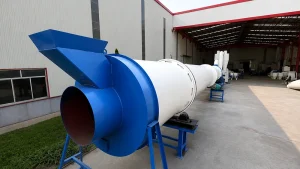
DRYR covers the furnish throughput window most small and medium pressed pallet, particleboard and molded pellet lines actually run, with a buffer left on top. H-1010 with a 1000 mm drum, 4 kW main motor and 7.5 kW blower delivers 0.8 to 1 t/h and matches a starter molded pallet line or a small pellet plant. H-1212 with a 1200 mm drum, 5.5 kW main motor and 7.5 kW blower adds headroom for moisture swings up to 1.2 t/h. H-1512 with a 1500 mm drum, 7.5 kW main motor and 11 kW blower covers 1.2 to 1.5 t/h, the typical MDF or particleboard furnish feed rate ahead of a continuous press. H-1815 with an 1800 mm drum, 11 kW main motor and 15 kW blower reaches 1.5 to 2 t/h, matching a biomass pellet mill or a higher-output molded pallet press. Choosing one size up from the calculated base load is how operators keep a 10 to 15 percent buffer for wet season or recycled-fiber batches without oversizing the drum.
Customizable drum length up to 17 to 18 m to match the water to evaporate
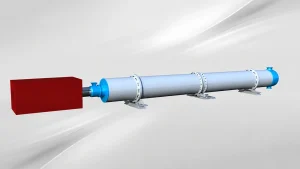
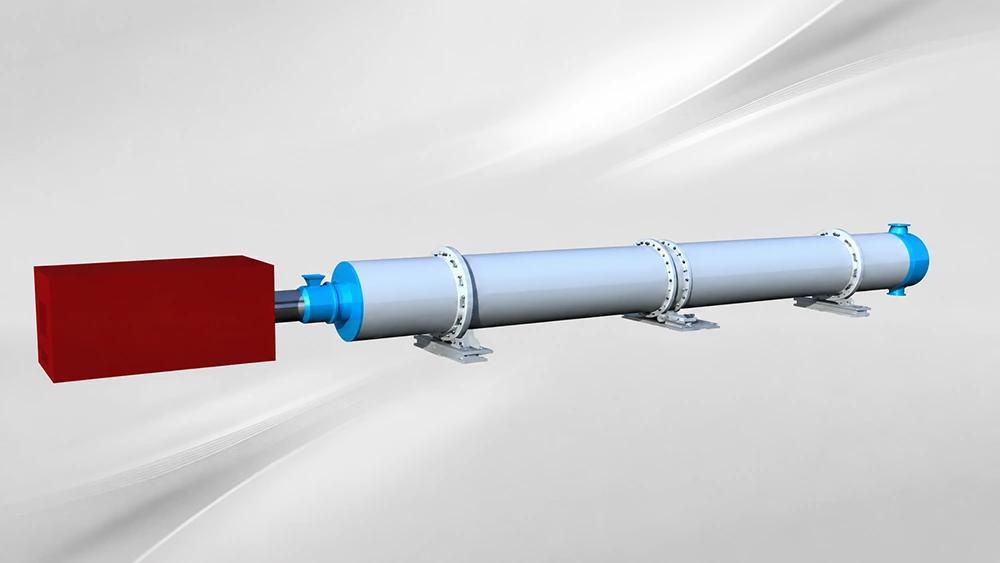
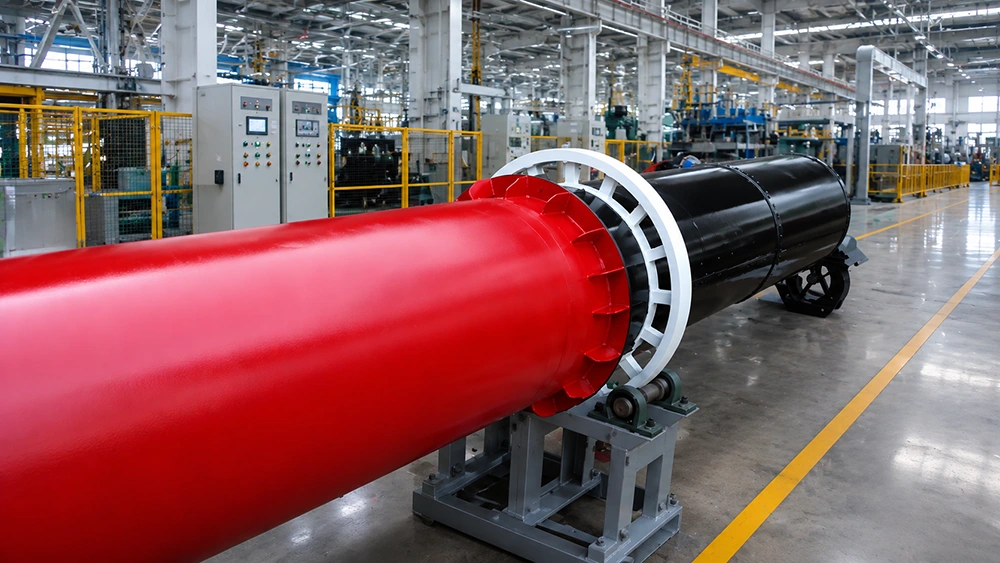
Drum diameter sets the geometry, but residence time is what actually moves water out of the furnish. A short drum at a given diameter can only carry so many liters of water per hour, no matter how hot the air. DRYR ships as a segmented, assembled structure so the drum can be extended to 17 to 18 m in the field, split-shipped in standard containers and bolted together on site, as the image of the segmented red and black drum on steel roller supports shows. The longer drum keeps the same 4 to 7 percent drum slope and 200 to 500 degrees Celsius hot-air working range as the standard unit, but triples the residence time per particle. For a 1.5 t/h molded pellet line drying furnish from 55 percent down to below 10 percent, that extra residence is what closes the gap between the calculated water to evaporate and what a pellet die or press cylinder can swallow per minute.
Result: hot press fed at nameplate throughput, buffer kept for moisture swings
A rotary sawdust dryer sized by water to evaporate rather than by nameplate tonnage turns a wood-based panel or molded pellet line from a press-capped operation into a dryer-capped one, which is the cheaper direction to be capped in. The DRYR assembled structure lets operators install a 17 to 18 m drum without paying the freight penalty of a one-piece 18 m unit, while the 0.8 to 2 t/h four-model range leaves room to step up when the line is debottlenecked downstream. Output moisture stays below 10 percent, hot-air furnace fuel spend holds inside the project coal or gas budget, and the press or pellet mill finally runs at the throughput it was sold on instead of at whatever the dryer can spare. For a complete line match, ask EMP for a water-to-evaporate calculation against your actual furnish moisture, particle size and hourly tonnage.
- keyword and intro use rotary sawdust dryer, DRYR, hot-press bottleneck, 0.8 to 2 t/h and 17 to 18 m drum length
- sections cover molded wood pallet, MDF, particleboard, biomass pellet and molded pellet line scenes as scene words from the traffic profile
- product words sawdust dryer and rotary sawdust dryer plus DRYR four-model range are present in body text
- no banned words: high quality, best solution, one-stop solution, advanced technology, reliable product