A client in the United States required a comprehensive technical plan to enter the molded pallet market with a scalable production strategy. The core needs were to understand the differences between semi-automatic and fully-automatic production lines, see a variety of pallet design options, and receive a clear plan for a facility that could grow from an initial capacity of 600 pallets per day to over 1,200. This case study details the phased solution we developed.
Planning for Growth: A Two-Phase Capacity Strategy
The project was designed around a phased approach to allow the client to enter the market efficiently and scale production in line with demand. The target product is the standard American 48″ x 40″ (1219 x 1016 mm) molded pallet.
| Phase 1 – Market Entry | Establish a production line with a capacity of 500-600 pallets per day. |
| Phase 2 – Expansion | Double the production capacity to 1,000-1,200 pallets per day to meet future growth. |
The Phase 1 Engineered Solution (600 Pallets/Day)
The foundational production line is engineered as a complete system to meet the initial 600 pallet/day target. Process calculations show that producing this volume requires processing 12-14 tons of wet raw material daily. The core of this semi-automatic line is a powerful and efficient presswood pallet machine setup. Key equipment includes:
| Component | Details |
|---|---|
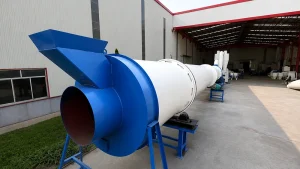
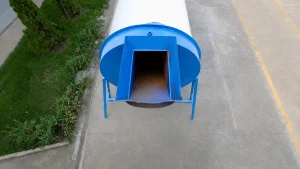
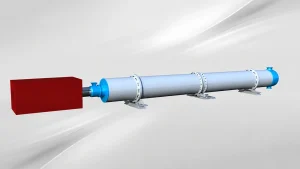
| Material Preparation | Includes a Wood Chipper, Wood Crusher, and a Rotary Dryer to achieve optimal material size and moisture content for MDI glue bonding. |
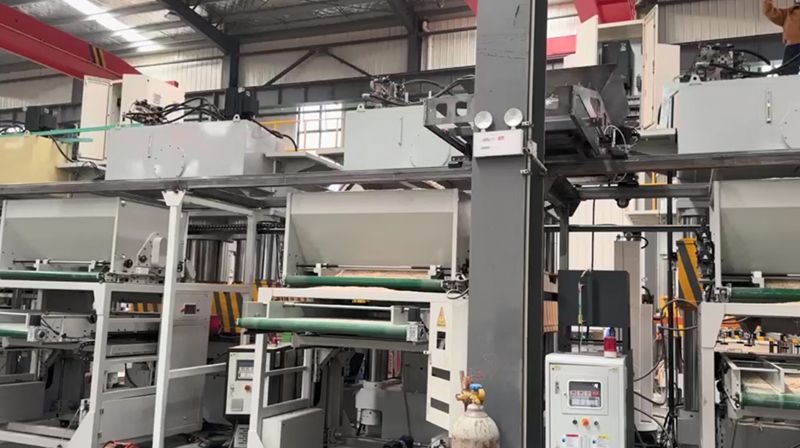
| Molding Core | Features two 1600-ton Hydraulic Presses, Mold Temperature Machines for precise heat control, and two automatic Glue Mixers for a consistent material supply. |
Semi-Automatic vs. Fully-Automatic Production
A key part of the technical proposal was a clear comparison of automation levels. The semi-automatic line offers a lower initial investment, relying on operators for material loading and pallet removal. A fully-automatic line integrates robotics and conveyors for feeding, leveling, extraction, and trimming, which improves consistency and reduces long-term labor costs.
Pallet Design Versatility and Factory Layout
To address the client’s interest in different pallet structures, we presented a range of available mold designs, including nestable nine-leg, cruciform base, flat-top, and three-runner pallets. We also provided a sample factory layout, estimating a 30m x 10m area for material preparation and a 22m x 7.5m area for the molding production, with a minimum building height of 6 meters.
The Advantage: Expertise, Customization, and Support
With 22 years of experience in hydraulic machinery and 12 years dedicated to molded pallet equipment, we have the expertise to deliver reliable solutions. We specialize in customizing each presswood pallet machine and production line to meet specific client needs. Our comprehensive support includes on-site installation, operator training, a one-year warranty, and lifetime technical consultation.