As a leader in a company with global reach, you spend meetings discussing interest rates, managing currency exposure, and mitigating geopolitical risks. You build complex models to forecast these major variables. Yet, the single event most likely to derail a critical shipment and damage a key customer relationship often has nothing to do with these big-picture issues.
It’s smaller. It’s more mundane. And it’s hiding in plain sight at the very bottom of your supply chain: the wooden pallet your goods are sitting on.
For decades, we’ve treated export logistics as a game of checklists. We fill out the forms, hire the right forwarders, and ensure our products are perfect. For wood packaging, we follow the ISPM15 protocol: we pay for heat treatment or fumigation, get the required stamp, and attach the certificate. We do everything we’re supposed to do.
And then, we hope. We hope the stamp is legible after weeks at sea. We hope the paperwork doesn’t have a typo. We hope the customs agent in Rotterdam or Long Beach is having a good day.
This is not a strategy. It’s a reliance on luck. And when your luck runs out, the true cost of a “minor” compliance failure reveals itself to be catastrophic. The problem isn’t just a delay; it’s the devastating financial and operational cascade that follows.
The Anatomy of a Six-Figure “Pallet Problem”
Let’s calculate the real cost. Imagine a single 40-foot container of high-value electronics is heading to a key automotive client in Germany. Your client runs on a just-in-time manufacturing schedule. A customs official flags the container because the IPPC stamp on a single pallet appears blurred and questions its legitimacy.
The container is pulled for inspection. Your shipment is now frozen. What does this “minor” delay actually cost?
| Cost Category | Description | Estimated Cost (USD) |
|---|---|---|
| Phase 1: Direct Port & Demurrage Costs | ||
| Demurrage & Detention | Carrier fees for the container sitting idle beyond the free period (est. $225/day). | $1,575 |
| Port & Terminal Fees | Storage fees at the terminal. | $1,050 |
| Inspection & Handling | Fees for moving the container to/from the inspection site and labor. | $800 |
| Forced Treatment | Cost to have the entire container’s wood packaging re-treated at the port. | $500 |
| Subtotal (Direct Hard Costs): | $3,925 | |
| Phase 2: Supply Chain & Business Continuity Costs | ||
| Emergency Air Freight | Your client’s production line is about to stop. You must air freight a partial emergency shipment. | $45,000 |
| Senior Management Time | Time spent in crisis management instead of productive work (est. 25 hours @ $200/hr). | $5,000 |
| Legal & Agent Fees | Fees for local customs brokers to resolve the issue. | $2,500 |
| Subtotal: | $52,500 | |
| Phase 3: Commercial & Reputational Damage | ||
| Contractual Penalties | Late delivery penalty (e.g., 1% of cargo value of $500k). | $5,000 |
| Price Concessions | Discounts offered on future orders to appease the client. | $15,000 |
| Lost Customer Trust | Jeopardizing a multi-million dollar annual account. | Potentially Infinite |
| Total Quantifiable Damage: | $76,425 | |
Suddenly, a problem originating from a $20 wooden pallet has snowballed into a potential $76,425 loss, excluding long-term reputational damage. You did everything “by the book,” yet the system itself, with its reliance on stamps and certificates, is inherently fragile. It is an unmanaged, ticking time bomb.
Shifting from Reactive Hope to Proactive Design
The only solution is to stop playing the compliance luck game. We must shift from proving compliance to designing for it. The goal is to create a logistics system so robust that it becomes invisible to these risks.
This means fundamentally re-evaluating the most basic components of our shipments. Instead of asking reactive questions, ask proactive ones:
- Instead of, “Is my paperwork correct?” ask, “Can I use a load-bearing platform that is inherently exempt from ISPM15 rules?” Consider presswood pallets, molded under immense heat and pressure, rendering them sterile by design.
- Instead of, “I hope the pallet doesn’t break,” ask, “Is my platform engineered with precise, consistent load-bearing capacity?” Molded wood pallets offer uniformity and predictable strength, free from the natural weaknesses and hidden flaws of conventional wood.
- Instead of, “I hope it doesn’t get wet,” ask, “Is my platform inherently resistant to moisture?” Certain platforms, manufactured from densified presswood, maintain structural integrity regardless of environmental conditions.
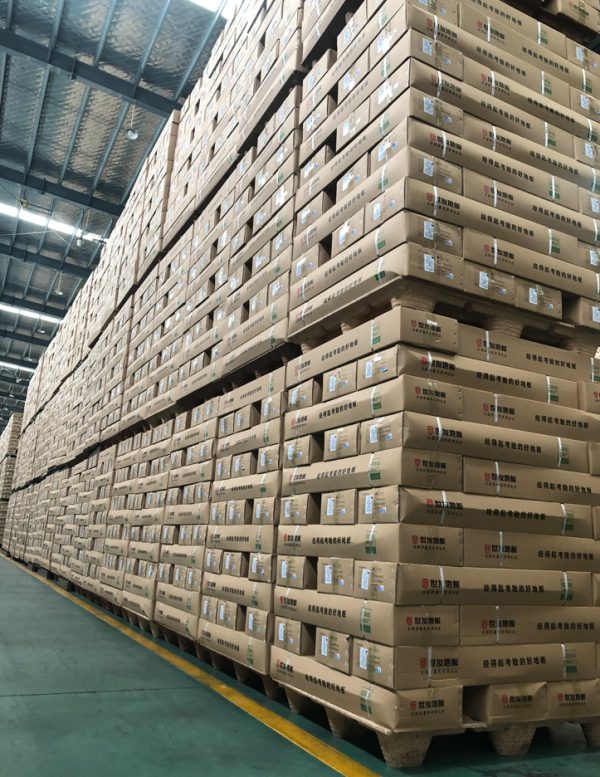
When you ask these questions, the solution becomes clear. It isn’t a better certificate. It’s utilizing a platform manufactured to be sterile and structurally sound from its creation. Presswood pallets and molded wood pallets represent this design shift – uniform, predictable, resistant, and inherently compliant.
As leaders, we systematically hedge currency and diversify markets. It’s time to apply the same strategic rigor to our physical supply chain foundations. Stop budgeting for pallet-related risk; proactively design it out. Replace fragile components with robust, engineered solutions. Your bottom line, your customers, and your operational sanity depend on it.