Circular supply chain
The residue argument has moved into the buyer questionnaire
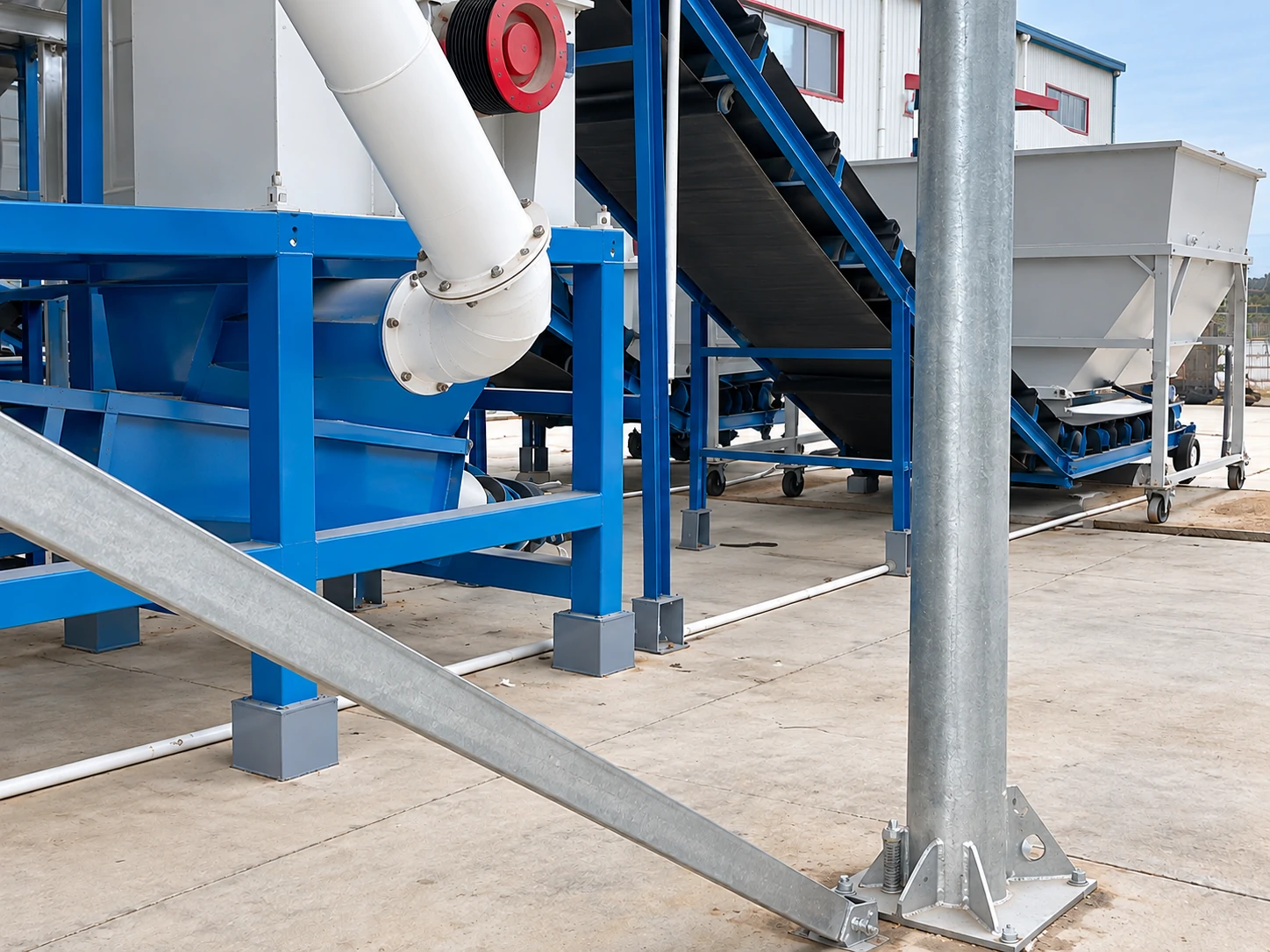
Downstream builders and distributors now ask for a low-carbon, traceable, circular route for every tonne that leaves the yard, and an unrecorded burn in the corner of the site does not survive that question. This page follows the residue stream of a sawmill and pallet plant onto a Pulvz wood pulverizer machine, where offcuts, block ends, trim rejects and reclaimed wood leave as a screen-set fibre instead of smoke: F-800 to F-1500 on 45 kW, 55 kW, 75 kW and 110 kW drives covering a nominal 1 to 8 t/h, replaceable 780 to 1480 mm high-hardness screens, manganese steel hammer plates running against a one-piece liner, belt conveyor feeding, and a hydraulic open cover that keeps hammer and screen work a planned stop. The limits are stated plainly: nominal tonnage moves with species, moisture, infeed evenness and screen condition, the 5 mm figure is a screen-set target band rather than a guarantee, and magnetic separation is a project-confirmed stage.
Why an open burn and a mixed pile both fail the test
Burning residue is a carbon accounting problem before it is anything else: the tonnage combusts without a product behind it, so there is nothing to offset the emission against in a buyer's file. It is also an air and fire problem inside the fence, because dry fines and offcuts hold heat, lift into the air, and behave differently in a yard that also stores finished pallets. Ash still has to be handled and paid for. The alternatives are no better on paper. Hand splitting with an axe or a saw is slow and produces no consistent particle. Buying ready-made sawdust moves the cost off the yard but also moves the traceability out of the buyer's reach. An old single-roll crusher, where one exists, produces an uneven output that a board line, pellet mill or press cannot buy against its own spec. And the highest-value fraction of the pile is the first thing lost: residual offcuts mixed with bark, grit and metal scrap get downgraded to a bulk tonnage, which is exactly the position the plant is trying to get out of.
What the wood pulverizer machine changes at the point of generation
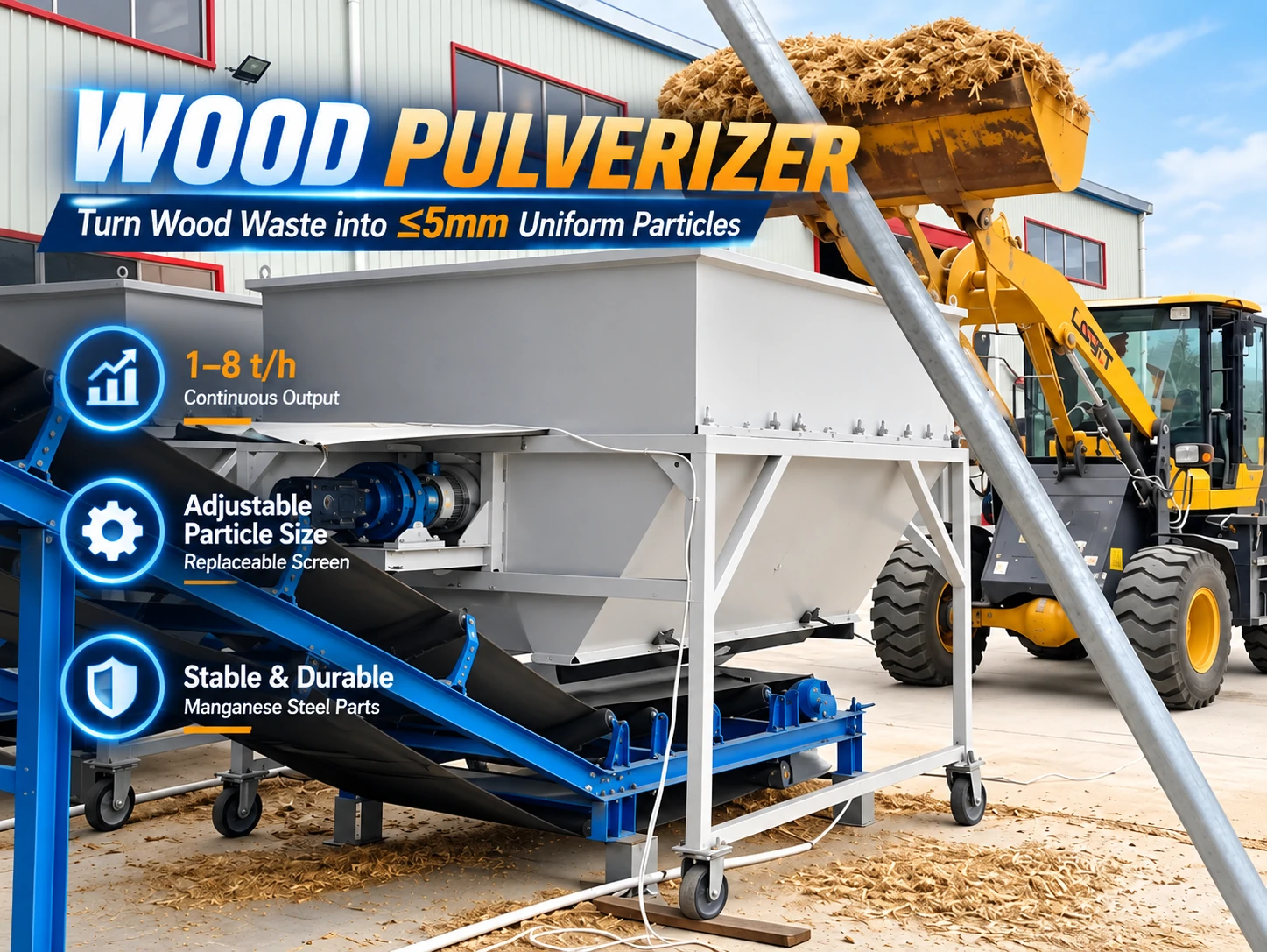
The change is placement. A Pulvz wood pulverizer machine sits where the residue is created rather than at the end of a truck route, so offcuts and reclaimed wood are converted on site into wood fibre instead of being accumulated, sold cheap or burned. Belt conveyor feeding takes an unsorted pile rather than a hand-fed trickle, and continuous high-speed crushing replaces manual splitting, which is the step that never had a rate the plant could plan against. The machine is a wood waste to sawdust crusher in practice: material enters, the rotor works it against the screen, and the discharge leaves as a particle band set by the screen rather than by the operator's judgement. Nominal output runs across a 1 to 8 t/h range on the F-800 to F-1500 tiers at 45 kW, 55 kW, 75 kW and 110 kW, with infeed openings from 680 x 380 mm to 1350 x 450 mm, so a plant can match the unit to the tonnage it actually generates instead of the tonnage a brochure promises. The same pass does the volume reduction: residue that occupied shed volume as slabs and edgings leaves as a flowable fibre, which changes what the yard can store and what a truck can carry out.
Structure and settings that make the output claimable
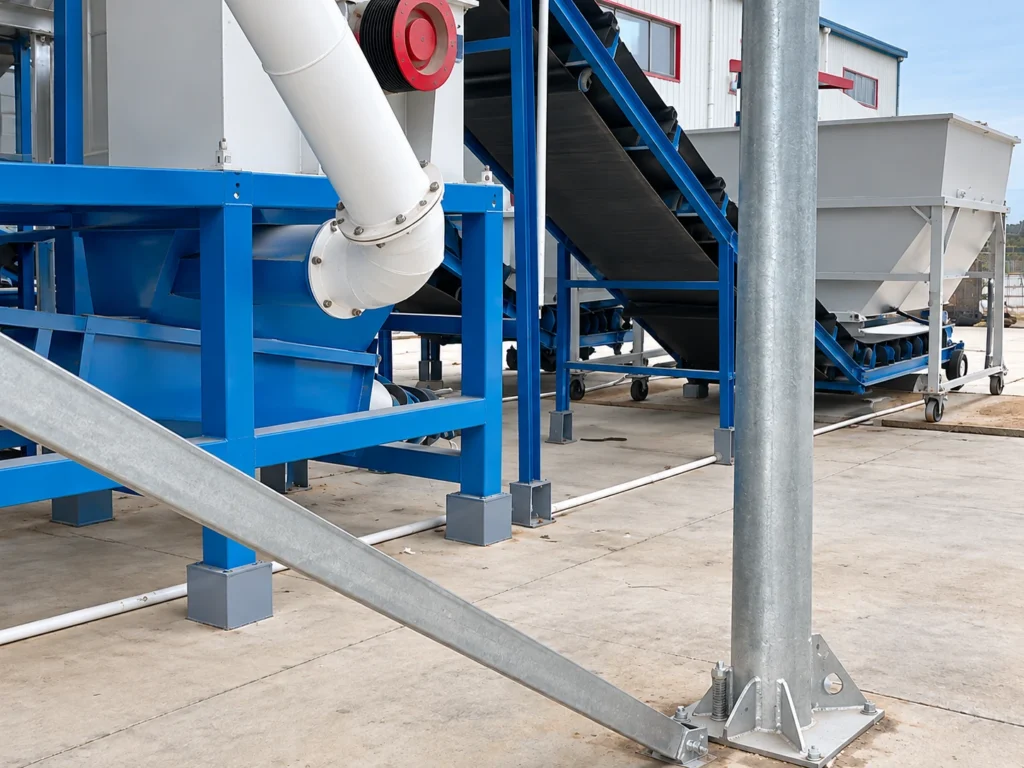
A circular claim only holds if the output is consistent enough to be sold and recorded, and consistency here is mechanical rather than aspirational. Particle size is controlled by a replaceable high-hardness alloy screen, available across a 780 to 1480 mm range, so the discharge target is a screen choice the plant owns and can change, and the fibre can be re-set for a different downstream buyer without a different machine. The working parts are built for the abrasive fraction: manganese steel hammer plates, thickened, run against a one-piece manganese steel liner, on a dynamically balanced rotor that keeps the unit steady through a long shift. A hydraulic open cover turns hammer and screen work into a planned stop rather than an improvised one, which matters because a claim fails the moment the line stops holding its spec. Around the body, belt conveyor feeding keeps the infeed continuous, a cyclone separator handles the dust side of the discharge, and magnetic separation is confirmed as a project stage rather than assumed as a standard item on every unit. The result is a residue stream that leaves the yard as a measurable circular raw material asset, with the fibre size, the tonnage and the equipment behind it available to put in front of a buyer, and the burn barrel becomes a line the plant no longer has to defend.
- Nominal 1 to 8 t/h is a machine range; real tonnage moves with species, moisture, infeed evenness and screen condition.
- The 5 mm figure is a screen-set target band, not a guaranteed output for every load.
- Magnetic separation is a project-confirmed stage, not a standard item on every unit.
- The customer's own carbon reporting, chain-of-custody file and disposal compliance remain the customer's work.