Skip to content
Home » October 20, 2026 » Page 2

October 20, 2026

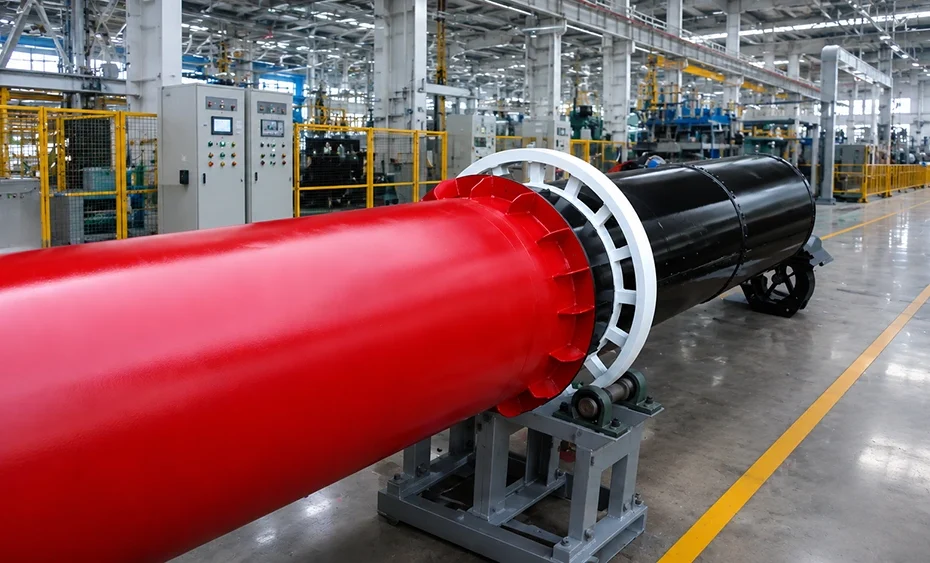
Red and black cylindrical drum assembly on steel roller supports in an industrial production hall

Biomass Sawdust Dryer for Boiler Fuel Demand That Keeps Climbing: Adding Capacity in 0.8 to 2 t/h Modules Instead of One Capital Bet

  •  

Boiler fuel demand in Australia and across the export lanes into Japan and Korea is climbing faster than a fixed drying plant can follow, and the purchase that decides whether a recycler takes the next contract is the biomass sawdust dryer, not the boiler. This page follows a wood and biomass recycler adding drying capacity in modules: the DRYR rotary sawdust dryer covers 0.8 to 2 t/h across four tiers on 1000, 1200, 1500 and 1800 mm drums with 4, 5.5, 7.5 and 11 kW main motors and 7.5, 7.5, 11 and 15 kW induced draft fans, output moisture stated below 10 percent on drum internal hot air quoted at 200 to 500 degrees Celsius, and drums built out to 17 to 18 m in bolted flange sections where residence time rather than heat is the constraint. The Renewable Energy Target, state bioenergy incentives, the Bioenergy Fund, the ARENA roadmap and Regional Bioenergy Innovation Grants reported at up to AUD 5 million matched sit behind the demand, while sun drying and one oversized drum cap the growth a yard can accept. Limits are stated plainly: those figures are quoted without published test conditions, so tonnage and final moisture move with species, initial moisture, particle size, fuel and climate.
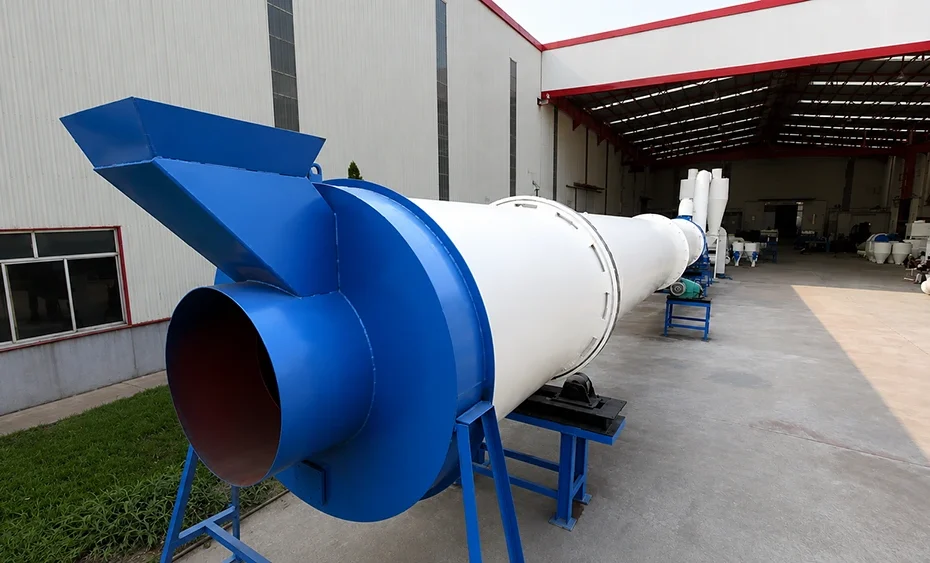
Industrial rotary sawdust dryer with blue feed hopper, white cylindrical shell and roller supports before split shipment

Sawdust Dryer Behind the Magnet and Screen: Bolting a Rotary Drum Drying Module Into a Recycling Line That Already Sorts Metal and Stone

  •  

Recycled wood from demolition timber, used pallets, crates and yard waste reaches the dryer carrying nails, wire, stones, grit and plastic as well as 35 to 60 percent moisture, and a rotary drum dryer is not a sorting device. This page follows the DRYR sawdust dryer placed downstream of the air separation, screening and magnetic separation a line already runs, as a standardized pre-treatment module: an assembled structure with bolted flange sections that ties the drum, feed connection, ducting and cyclone into the existing layout without rebuilding the line, H-1010 to H-1815 on 1000, 1200, 1500 and 1800 mm drums at 0.8 to 2 t/h with 4, 5.5, 7.5 and 11 kW main motors and 7.5, 7.5, 11 and 15 kW induced draft fans, drum internal hot air quoted at 200 to 500 degrees Celsius, output moisture stated below 10 percent, combined lifting plates with temperature sensing and a sealed drum, self-insulation above 80 percent thermal efficiency, a cyclone dust collector with optional baghouse, and drums built to 17 to 18 m in bolted sections. Limits are stated plainly: those figures carry no published test conditions, and tramp metal, stone and plastic removal stays an upstream project-confirmed stage.

Industrial rotary sawdust dryer with blue feed hopper, white cylindrical shell and roller supports before split shipment

Sawdust Dryer With Cyclone Dust Collector: Cutting Dust Escape and Fire Risk on a 0.8 to 2 t/h Rotary Drum Line

  •  

Wood fibre and wood dust are the same material in two states, and a drying line that lets the second state escape is running a fire load it does not measure. This page follows a plant crushing, drying and screening wood residue for pellets, board or molded pallets, where fine dry fibre leaves the drum ends and the inlet chute, settles on the yard and the roof structure, and carries the lowest ignition temperature on site at roughly 280 degrees Celsius or below, inside the 200 to 500 degrees Celsius band the drum is designed to run at. It sets out what the DRYR rotary sawdust dryer changes: a sealed drum and inlet chute, monitored seal condition, exhaust routed to a cyclone dust collector with a baghouse filter where the project asks for one, and PLC control tying feed, furnace and induced draft fan together, across H-1010 to H-1815 at 0.8 to 2 t/h on 1000 to 1800 mm drums with 4, 5.5, 7.5 and 11 kW main motors, 7.5, 7.5, 11 and 15 kW induced draft fans, output moisture stated below 10 percent and drums built out to 17 to 18 m in bolted flange sections. Limits are stated plainly: figures are quoted without published test conditions, so tonnage and final moisture move with species, initial moisture, particle size, fuel and site conditions.

3D cutaway rendering of a brick-lined industrial drying furnace with burner assembly and internal baffles

Multi-Fuel Sawdust Dryer for a Wood Recycling Yard: Burning the Reject Fraction Instead of Bought Coal

  •  

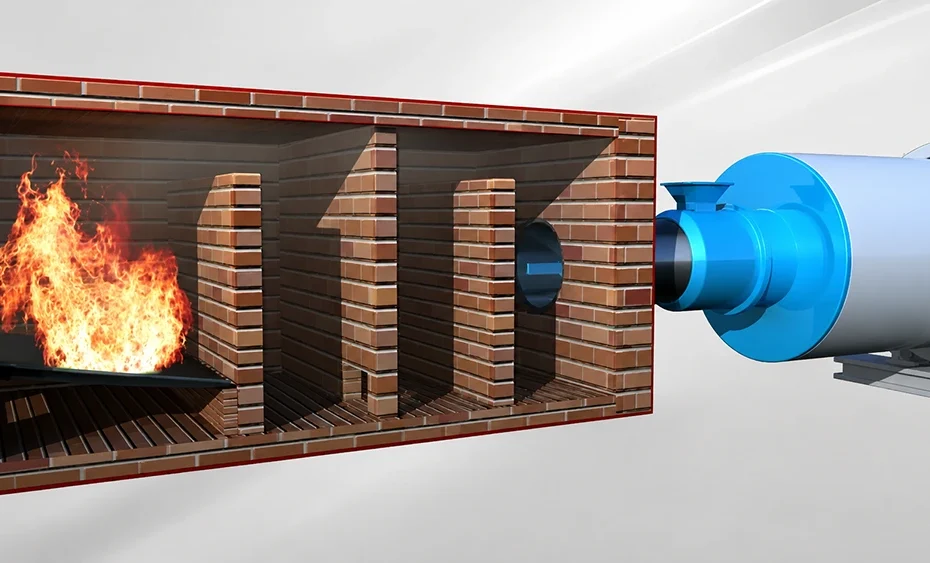
A recycling yard that dries its own tonnage makes the dryer the biggest fuel consumer on site, so the fuel question becomes the machine question. This page follows the DRYR multi-fuel sawdust dryer through that decision: a refractory brick-lined combustion chamber taking coal, oil, gas or the yard’s own sawdust, chips, crushed offcuts, pellets and powder; a self-insulation shell quoted above 80 percent thermal efficiency and under 8 kg of coal per tonne dried; an H-1010 to H-1815 ladder at 0.8 to 2 t/h on 1000, 1200, 1500 and 1800 mm drums with 4, 5.5, 7.5 and 11 kW main motors and 7.5, 7.5, 11 and 15 kW induced draft fans; drum internal hot air quoted at 200 to 500 degrees Celsius with output moisture below 10 percent; combined lifting plates, temperature sensing and a sealed drum; a cyclone separator or optional baghouse; and bolted-flange sections where the drum runs to 17 to 18 m. Limits are stated plainly: those figures carry no published test conditions, so fuel burn, tonnage and final moisture move with species, initial moisture, particle size, fuel and climate.
White horizontal rotary drum dryer with external girth gear, pinion drive, gearbox, and electric motor

Rotary Sawdust Dryer Energy per Tonne: Why Drum Length and Residence Time Beat a Hotter Furnace on a 0.8 to 2 t/h Pellet Line

  •  

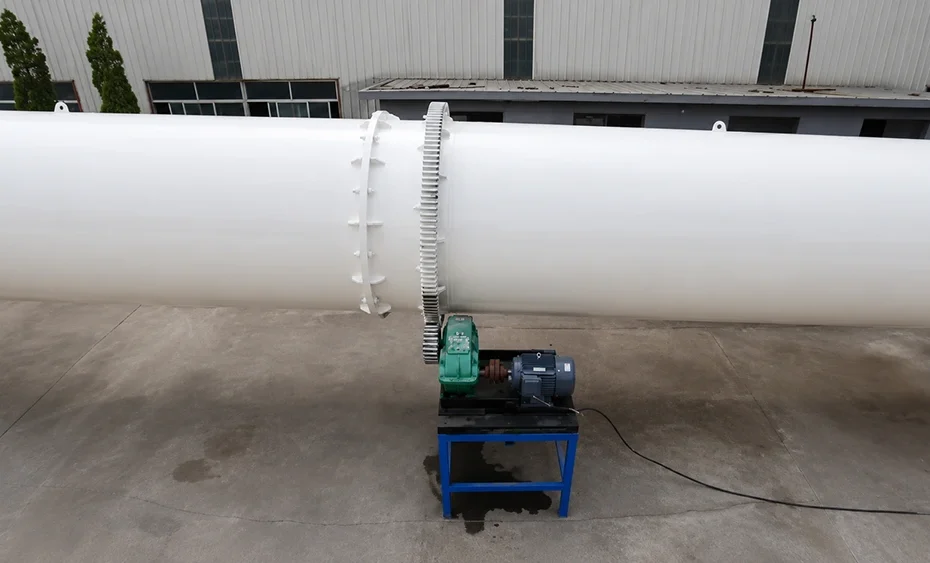
Drying is quoted at roughly 70 percent of the energy a pellet line spends, and that share is decided at the rotary sawdust dryer, not at the pellet mill. This page follows DRYR through the problem it is bought to solve: recycled wood and sawmill residue arriving at 35 to 60 percent moisture against a 10 to 15 percent target, a site that answers high output moisture by raising furnace heat, and the three reasons that stops paying back, from sawdust ignition temperatures at or below 280 degrees Celsius to open drum ends pulling cold air in. It then sets out what the machine changes, temperature sensing, uniform vibration off the lifting plates and a sealed drum and inlet chute, and treats drum length as the real design variable: the H-1010 to H-1815 tiers at 0.8 to 2 t/h on 1000, 1200, 1500 and 1800 mm drums with 4, 5.5, 7.5 and 11 kW main motors and 7.5, 7.5, 11 and 15 kW induced draft fans, drum internal hot air in the 200 to 500 degrees Celsius band, output moisture stated below 10 percent, and drums built out to 17 to 18 m in bolted flange sections for residence time on high-moisture feed. Limits are stated plainly: those figures are quoted without published test conditions, so tonnage and final moisture move with species, initial moisture, particle size, fuel and site conditions.

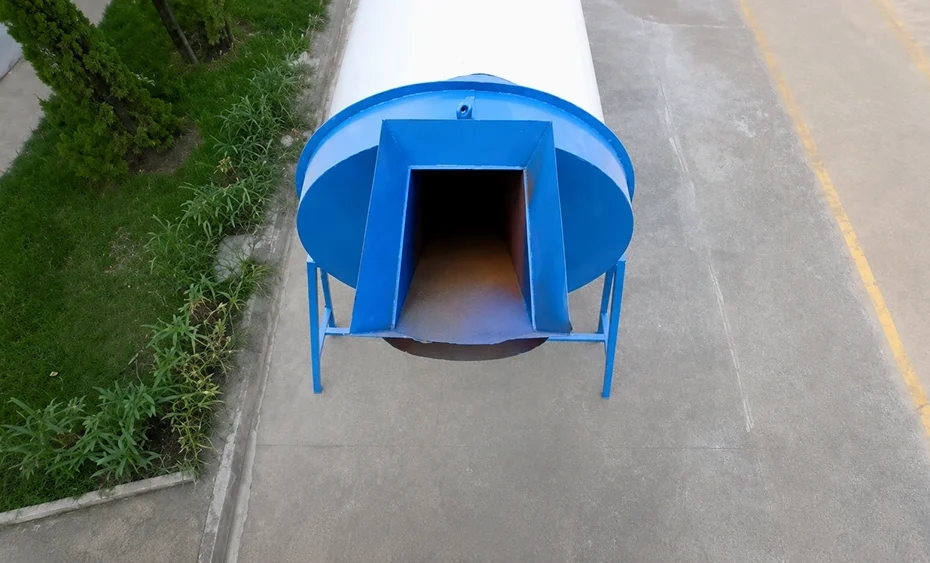
Industrial sawdust dryer front end with rectangular inlet chute, curved guard panels and steel support legs on an assembled drying module

Sawdust Dryer for Pellet Production: Stopping Pellet Mill Overload, Roller Slip and Die-Hole Blockage on 35 to 60 Percent Wet Wood

  •  

Wood at 35 to 60 percent moisture does not fail in the dryer, it fails in the pellet mill: overload, roller slip, blinded die holes, cracked pellets and re-feed. This page follows the DRYR sawdust dryer for pellet production stage through temperature sensing, uniform vibration and a sealed drum, an H-1010 to H-1815 ladder at 0.8 to 2 t/h with drum internal hot air quoted at 200 to 500 degrees Celsius and output moisture below 10 percent, and a drum built out to 17 to 18 m in bolted-flange sections where residence time rather than heat is the constraint. Limits are stated plainly: those figures are quoted without published test conditions, so tonnage and final moisture move with species, initial moisture, particle size, fuel and site conditions.

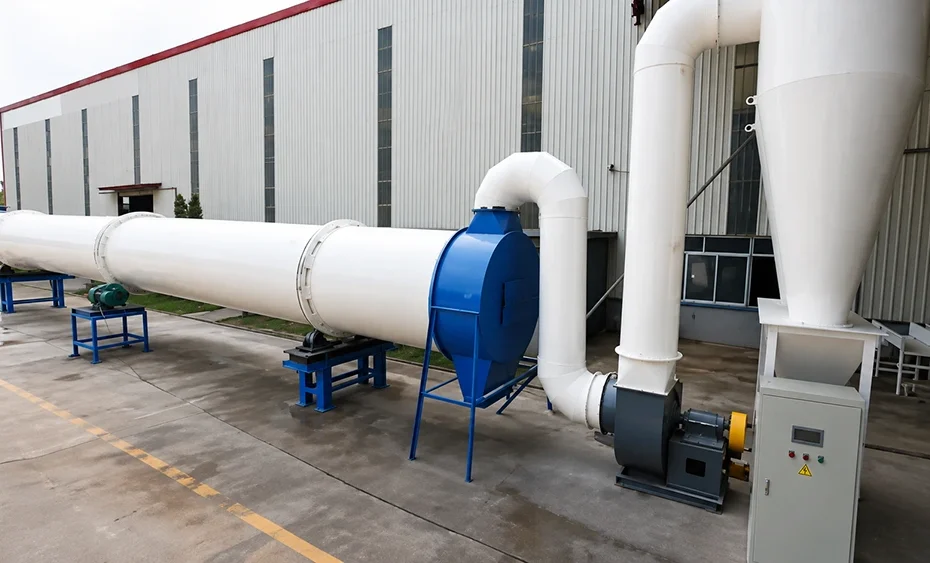
Industrial rotary drum dryer with cyclone separator, process ducting, blower, and steel support frames

Sawdust Rotary Drum Dryer for Recycled Wood and Yard Waste: Holding Boiler Fuel Pellet and Panel Fibre Moisture Inside the 10–15% Window

  •  

Recycled wood from demolition timber, used pallets, crates and yard waste reaches the hopper at whatever moisture the yard allowed, and batch variance is what stops a boiler fuel pellet mill or a panel fibre line from running to design. This page follows the DRYR sawdust rotary drum dryer through that intake: continuous hot air drying with combined lifting plates and temperature sensing monitoring, an H-1010 to H-1815 ladder at 0.8 to 2 t/h on 1000, 1200, 1500 and 1800 mm drums with 4, 5.5, 7.5 and 11 kW main motors and 7.5, 7.5, 11 and 15 kW induced draft fans, drum internal hot air in the 200 to 500 degrees Celsius band, output moisture stated below 10 percent and taken lower where the process asks, and under 8 kg of coal per tonne dried. A sealed drum and inlet chute with a cyclone dust collector, optional baghouse and PLC control, and bolted-flange sections for split shipment and on-site assembly, hold the 10 to 15 percent window that pellet and board buyers specify. Limits are stated plainly: those figures are quoted without published test conditions, so tonnage and final moisture move with species, initial moisture, particle size, fuel and site conditions, and each project is sized on its own sampling.

Get a Pallet Machine Price Quote & ROI Plan
Request Quote WhatsApp
🇬🇧 EN 🇪🇸 ES 🇫🇷 FR 🇷🇺 RU 🇮🇹 IT 🇩🇪 DE 🇳🇱 NL
×

Get a Precision Quote

Leave your requirements below. Our engineers will reply within 12 hours with customized technical details and pricing.