
Are you still dealing with the headache of exporting heavy industrial motors or precision CNC parts, only to have standard wooden pallets crack under intense point loads? Or worse, getting your equipment held up at European ports due to missing or illegible ISPM 15 stamps? For machinery exporters, a broken pallet means damaged calibration, and a customs hold means massive demurrage fees. Discover how engineered molded pallets solve both extreme weight requirements and strict compliance issues in one go.
The Hidden Traps of Exporting Machinery on Standard Wooden Pallets
Heavy machinery manufacturing presents unique logistical challenges. Equipment is often incredibly heavy, asymmetrical, and highly sensitive to moisture and vibration. Traditional GMA solid wood pallets are assembled using nails and staples. When a 4,500 lbs industrial pump or a sensitive medical imaging device shifts during rough ocean transit, internal stress causes these fasteners to experience “nail pops.”
These protruding nails easily tear through the VCI (Volatile Corrosion Inhibitor) moisture-barrier bags encasing your equipment, leading to devastating saltwater corrosion on precision-machined metal surfaces. Furthermore, raw solid wood pallets face rigorous quarantine inspections. A single microscopic pest or a trace of fungi found in the wood can lead to your entire container being rejected or incinerated at the destination port.
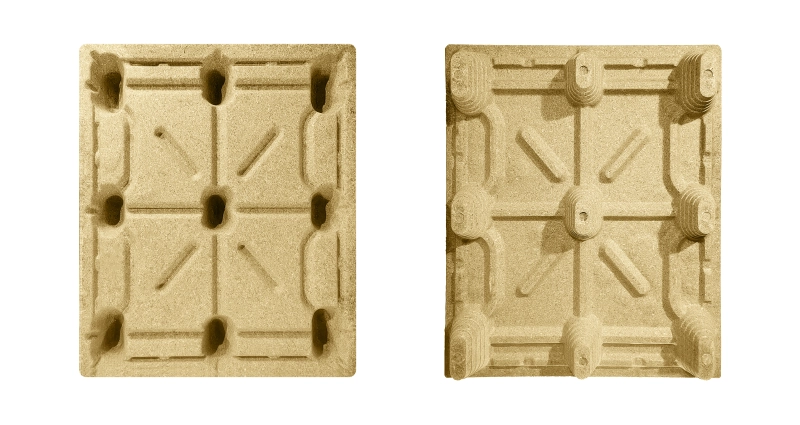
This is where pressed wood pallets completely change the game. Manufactured using a 1600-ton servo-controlled hydraulic press, these pallets feature a one-piece construction. There are zero metal fasteners, zero splinters, and zero internal stresses that could cause warping. The completely flat, snag-free surface ensures your vacuum-sealed packaging remains perfectly intact. More importantly, because they are manufactured under 220℃ high heat and extreme pressure, they are globally recognized as “processed wood.” This makes them naturally ISPM 15 exempt pallets, allowing your machinery to bypass fumigation certifications and sail through customs without delay.
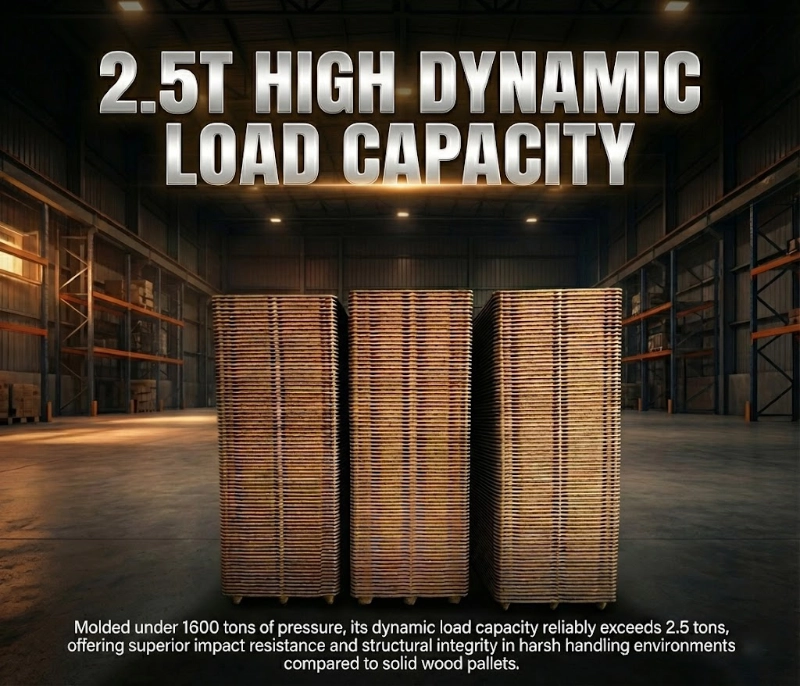
Handling Extreme Point Loads: The Structural Integrity Advantage
When machinery manufacturers ask about “custom size presswood pallets,” they are usually trying to solve a specific problem: their equipment’s metal feet or uneven weight distribution is punching through standard pallet decks. Machinery often creates severe point loads rather than evenly distributed weight.
While creating a one-off custom mold for a single machine size is cost-prohibitive, our standard 48″ x 40″ (1200x1000mm) heavy duty molded pallet serves as the ultimate foundational base for modular machinery crating. Thanks to the premium MDI adhesive used in our manufacturing process, the wood fibers form a highly resilient polyurethane molecular chain.
| Performance Metric | Traditional Nailed Wood Pallet | Ampallet Heavy Duty Presswood Pallet |
|---|---|---|
| Dynamic Load Capacity | Approx. 2,000 – 3,000 lbs (prone to flexing) | Up to 5,500 lbs (2.5 Tons) with zero flexing |
| Point Load Resistance | Poor (deck boards easily snap) | Excellent (high-density fiber absorbs shock) |
| Moisture Resilience | Absorbs moisture, risk of mold during ocean transit | MDI cross-linking provides superior water resistance |
Instead of building a weak custom wooden skid from scratch, machinery engineers can bolt their equipment directly onto our standard presswood bases, utilizing the pre-engineered dynamic load capacity of 2.5 tons and a static load capacity of over 15,000 lbs. It absorbs transit vibrations far better than brittle urea-formaldehyde (UF) pallets, protecting delicate internal electronics and calibrations.
The “One-Way Export” Economics for Equipment Manufacturers
Many machinery manufacturers assume that to carry heavy loads safely, they must invest in heavy-duty plastic pallets. However, plastic pallets can cost upwards of $80 to $120 each. In the cross-border machinery trade, you are shipping equipment to an end-user overseas—you will never see that pallet again. Using expensive plastic for one-way shipping is a massive drain on your packaging budget.
Our molded wood pallets are the ultimate one way pallet solution. They offer the robust structural integrity required for heavy industrial equipment but are priced as a cheaper alternative to wooden pallets and plastic pallets. You eliminate the cost of heat-treatment certificates, reduce the risk of cargo damage claims, and significantly lower your Total Cost of Ownership (TCO) per exported unit.

Space Optimization Before the Machine is Built
In a high-value machinery manufacturing plant, floor space should be dedicated to assembly lines and precision testing, not to storing stacks of empty pallets. Traditional solid wood pallets cannot be nested; a stack of 50 pallets will tower over 25 feet high, creating safety hazards and eating up premium warehouse space.
Ampallet’s patented inverted cone design allows for a 4:1 nesting ratio. 50 nested presswood pallets take up only about 7 feet in height. This means your forklift operators and warehouse material handlers spend significantly less time moving bulky empty pallets around the dock. The lightweight nature of the pallet (up to 60% lighter than solid wood) also reduces the physical strain on your packaging crew when staging pallets for the crating process.
Frequently Asked Questions (Machinery Export Packaging)
1. Are presswood pallets strong enough to support heavy CNC machines and industrial motors?
Yes. Thanks to the 1600-ton high-pressure molding process, our heavy-duty models offer a dynamic load capacity of up to 5,500 lbs (2.5T) and a static load of over 15,000 lbs, easily handling the concentrated point loads of industrial machinery.
2. Do I need to arrange for ISPM 15 heat treatment when using these for cross-border machinery shipments?
No. Because they are manufactured under extreme heat and pressure, they are classified globally as “processed wood.” They are inherently ISPM 15 exempt, meaning no heat treatment stamps or fumigation certificates are required at any customs port.
3. Will the pallet surface damage the VCI moisture-barrier bags protecting my equipment?
Absolutely not. The one-piece molded design eliminates all nails, staples, and sharp wood splinters. The flat, smooth surface ensures that your vacuum-sealed bags remain intact, preventing saltwater corrosion during ocean transit.
4. How does the cost compare to heavy-duty plastic pallets for one-way exports?
They are significantly more cost-effective. While heavy-duty plastic pallets can cost $80-$120 (a sunk cost for one-way exports), presswood pallets provide similar load-bearing capabilities at a fraction of the price, making them the ideal one-way packaging solution.
5. Can these pallets withstand high humidity environments during long ocean freight journeys?
Yes. We use premium MDI adhesive, which creates a highly resilient polyurethane molecular chain within the wood fiber. This provides exceptional water resistance, preventing the pallet from swelling, delaminating, or growing mold even in high-humidity shipping containers.