Process repeatability, documented per batch
What a Spec Consistency Request Actually Asks For
A buyer that already approved the sample pallet rarely sends a new drawing. It sends a consistency request: the next thousand units should arrive within the same length, height, mass and finish as the sample, and the supplier should be able to say how that is held. That request is three requests in one, because dimension comes from tooling, mass comes from how much fibre and binder enter the cavity, and appearance comes from mold condition, demolding and cure. An AutoML presswood pallet machine answers them from those three controlled inputs rather than from operator habit, and this page sets out which evidence a molded pallet production line can actually hand over, and where the figures must still be confirmed on samples and an agreed test method.
Where the Hand-Fed Line Loses Repeatability
On a manual or semi-manual line the variation is rarely inside the press. It sits in the metres before it. Fibre is thrown into the cavity with a shovel or a hand rake, so cavity fill differs from unit to unit even when the same recipe is written on the wall. Binder is poured from a jug against a mark, so the glue fraction follows the person on shift. Moisture is judged by grip and colour rather than by a reading, and the press is closed when the last pallet has been carried out, so the cycle stretches and shortens with the crew and with the take-out queue. The larger problem is not the drift itself but the missing record. When the buyer asks for evidence across three lots, a hand-fed line can show the pallets that shipped. It cannot show what the fill weight was on the units that were stripped, so the reject cause stays an opinion and every improvement is argued rather than measured. That is the gap a buyer reads as risk, before any millimetre is discussed.
Weighing, Dosing and the Steel Mold: The Two Controlled Inputs
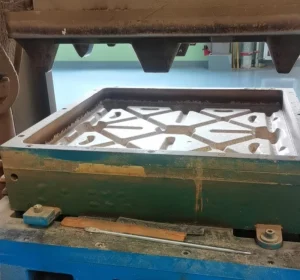
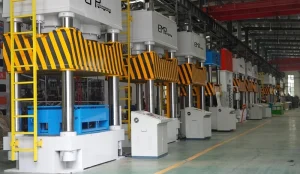
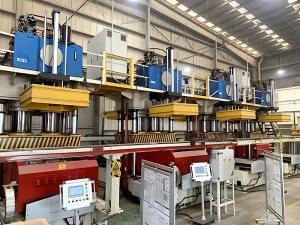
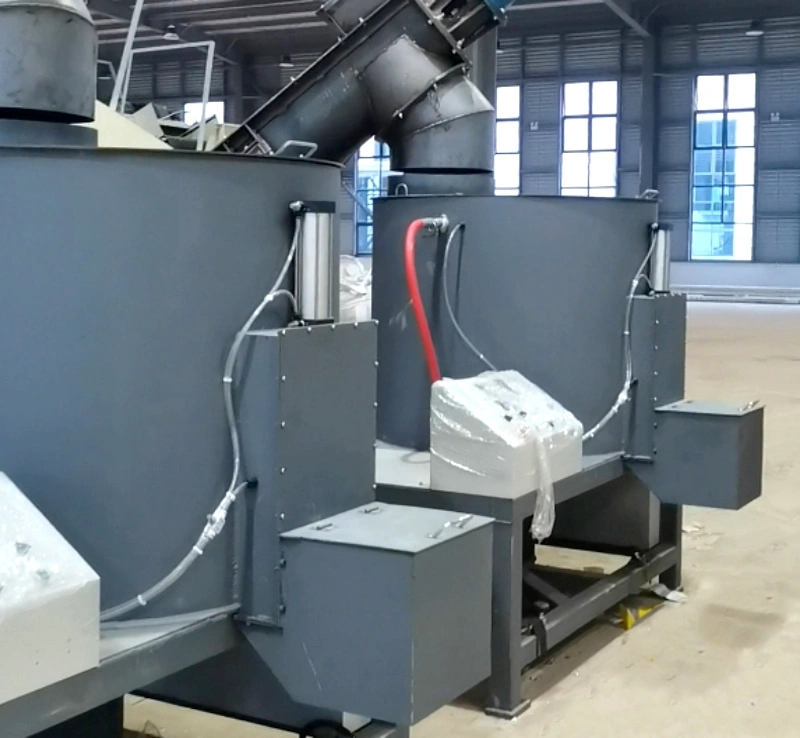
AutoML moves the mass question to the spreader and the geometry question into the tool. On this molded pallet production line the fibre load is set by a rail-mounted weighing and dosing spreader with belt feeders, so the cavity receives a weighed amount rather than a shovelled amount, and the binder is delivered by a metered mixer with dosing screw conveyors instead of a hand charge. Reference figures used in configuration: MDI commonly around 8 to 10 percent, UF or PF around 10 to 12 percent, and finished density at 0.8 to 1.2 grams per cubic centimetre. Geometry then belongs to one steel mold in a hydraulic press, with press tiers from 1200T to 2200T, a 1600T class reference unit running a hot press at 150 to 180 degrees Celsius, 15 to 20 MPa and a 180 to 240 second cycle. The feeding and glue group shown with this page is the part of the line that holds weight, and the press row is the part that holds shape; both are configured as a one-piece pallet press solution rather than as separate stations an operator has to synchronise by hand.
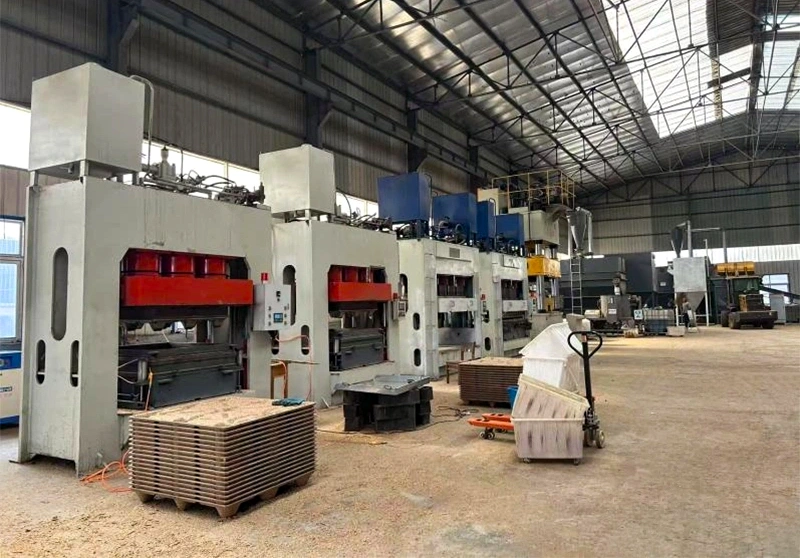
What the Plant Puts in Front of the Buyer, and Where the Claim Stops
A plant that wants the order writes a short process statement and attaches samples. The statement names the mold number and drawing revision, the fill weight window per unit, the glue fraction and density check, the press settings in use, and the inspection method agreed with the buyer: vernier readings on length, width, height, corner height difference and fork entry, mass on a calibrated scale, and density from a measured sample rather than from a label. Run the first article on the buyer's own fibre mix, so species and moisture effects surface before the order rather than after the third container. An automated pallet manufacturing line makes that statement repeatable, and it also supports the downstream claims a buyer often folds into the same conversation, since a fumigation-free pallet machine route reads as ISPM-15 exempt pallet equipment in the destination market and as eco-friendly pallet production and wood waste to pallet conversion at the front of the plant. The limits belong in the same document. Actual dimensions and performance are confirmed on product samples and the agreed test method; a reference figure from a machine sheet is not a specification for a custom mold. Tonnage, mold and cycle are confirmed per project in the technical agreement, moisture still has to be matched to the glue system from trial data, and any reduction in rejects is measured on the customer's own fibre, crew and sampling plan rather than assumed as a percentage. Automation gives the buyer a repeatable base to inspect; it does not replace training, process confirmation or shop-floor management.
- Finished dimensions, mass and appearance tolerances are confirmed on the customer's samples and agreed test method, not taken from reference figures.
- Press tonnage, mold, cycle, temperature and pressure are confirmed per project in the technical agreement.
- Density and glue fraction are matched to fibre species, moisture and glue system from trial data.
- Any consistency or reject improvement is measured on the customer's own fibre, crew and sampling plan rather than assumed.