Chemical Plant Pallet Pool: Nestable Presswood Pallet Cuts Empty Pallet Storage to About a Quarter of the Floor
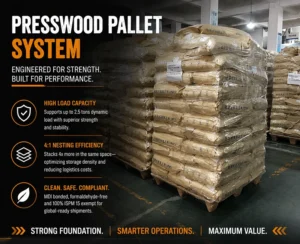
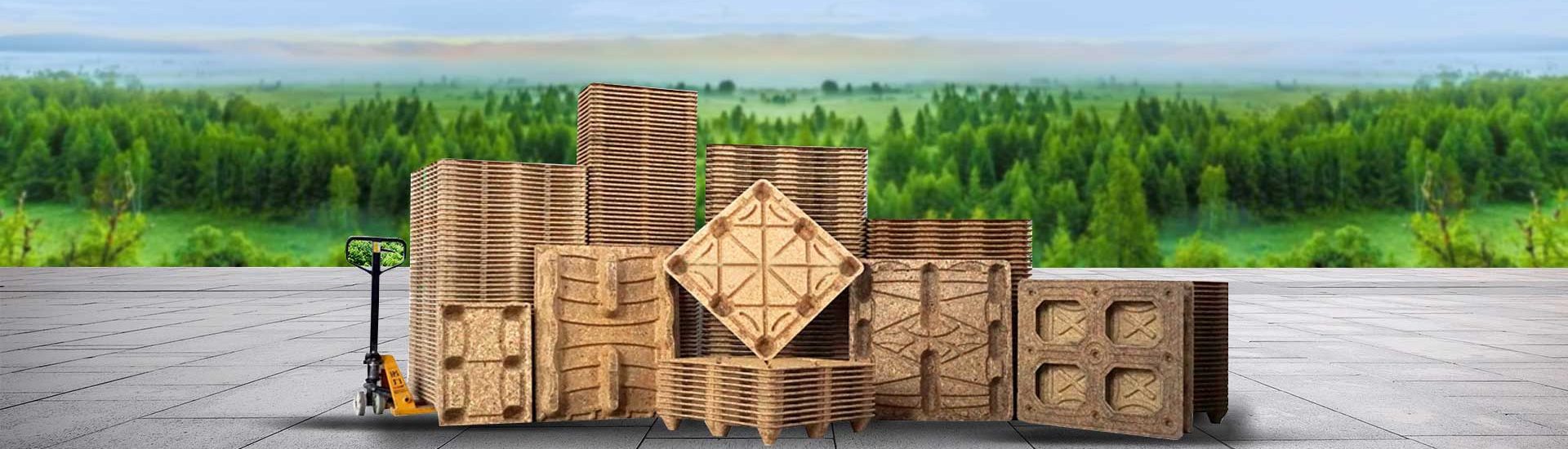
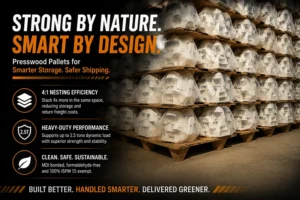
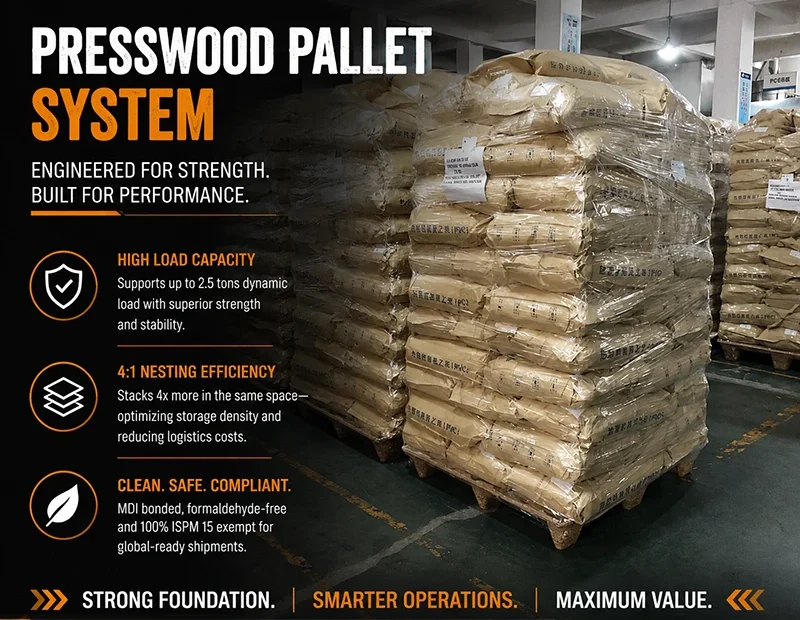
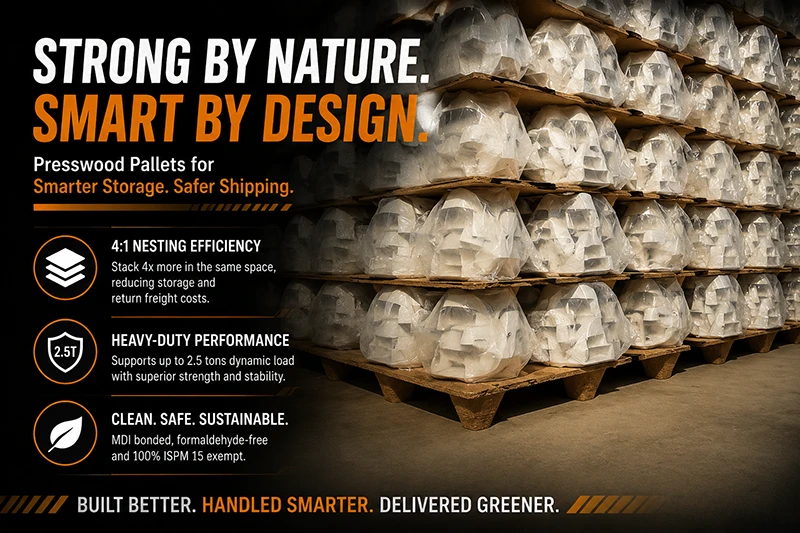
A chemical producer running a couple of hundred sites pays for empty pallets twice: once to buy them, once on every square metre of covered floor they hold between loads. Solid wood GMA and Euro pallets and most heavy-duty plastic pallets are rigid bodies with fixed feet, so an empty unit takes the same floor as a loaded one, a stack of the same count runs to about 2.7 metres instead of 0.75 metres, and the yard competes with raw material and finished goods storage. Ampallet is a nestable presswood pallet molded in one piece from wood fibre and MDI adhesive, with inverted cone feet that settle into the deck recesses below at roughly a 4 to 1 nesting ratio, so the same pallet count occupies about a quarter of the floor and site-to-site buffers can be rebalanced without a chamber booking or a truck carrying air. Design references put the 1140 x 1140 chemical drum size at 2500 kg dynamic and 7000 kg static load, 92 to 96 mm fork entry with guide slots, four-way entry and flatness near plus or minus 2 mm; a 1200 x 800 unit runs about 13 to 14 kg. Published positioning places empty pallet storage saving near 70 percent and storage capacity at about 2.5 times on the same floor. Limits are stated plainly: load, nesting ratio and floor saving are recalculated per site and mold, the nestable single-face unit is not a racking pallet, and fumigation-free use stays a destination and forwarder question.
Nestable Presswood Pallet for One-Way Chemical Export: Cutting Empty Pallet Return Freight and Yard Cost
A chemical B2B exporter shipping drums and jumbo bags into ninety-plus countries pays for the pallet on both legs. Ampallet is a nestable presswood pallet pressed in one piece from wood fibre and MDI adhesive, with an inverted cone foot geometry that lets empty units settle into each other at about a 4 to 1 nesting ratio, so empty return volume falls to roughly a quarter of the solid wood equivalent and a 1200×800 unit runs about 13 to 14 kg. Design records put the 1140×1140 chemical drum size at 2500 kg dynamic and 7000 kg static load, 92 to 96 mm fork entry with guide slots, 4-way entry and a processed wood position that supports a fumigation-free ISPM 15 reading, subject to destination rule and forwarder confirmation. Published positioning places empty pallet storage saving near 70 percent, return freight reduction near 60 percent and one-way cost near a third of a plastic pallet; those figures are recalculated per lane rather than assumed, and the pallet is not a racking pallet.
REACH and CARB-NAF Formaldehyde Pressure on Chemical, Pharma and Personal Care Cargo: Auditing a Presswood Pallet Binder Before the Supplier Sustainability Review
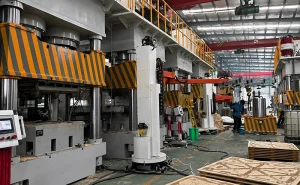
A specialty chemical, pharmaceutical or personal care shipper that answers a customer sustainability review is asked one packaging question it cannot dodge: what binder is in the pallet under the drum. Heat treated solid wood keeps the ISPM 15 treatment, marking and certificate attached to every consignment, and a low cost pressed pallet bonded with urea formaldehyde carries free formaldehyde that releases in humid heat and swells once it takes water, which is a contamination path with a REACH restriction and a CARB limit attached. Ampallet molded wood pallets are bonded with MDI, a polyisocyanate adhesive named on the material sheet, and hold a CARB-NAF no added formaldehyde position: no formaldehyde in the binder to release, moisture curing rather than moisture sensitive, plus a one piece nail free deck pressed at 150 to 180 C on a 1600 ton press, deck flatness to about plus or minus 2 mm, 2500 kg dynamic and 7000 kg static load references, four way entry, 4 to 1 nesting and ISPM 15 exemption as processed wood. Limits are stated plainly: the pallet does not replace the shipper’s own REACH registration and SDS obligations, and certification is supplied per product and plant.
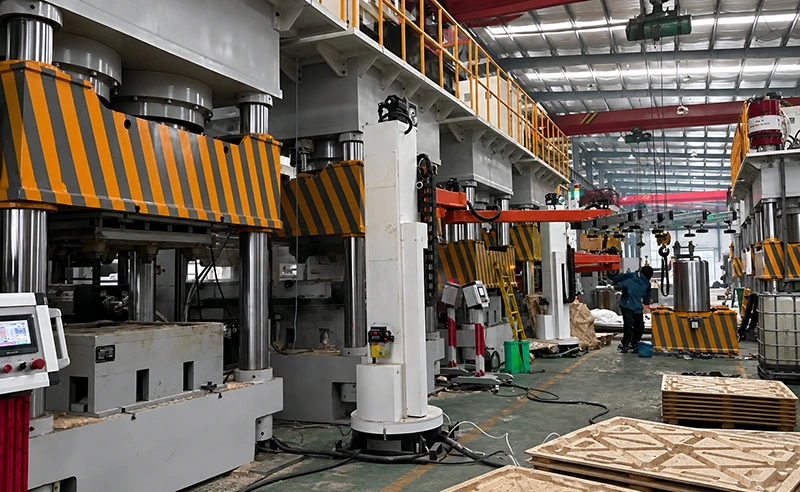
AutoG Automatic Pallet Take-Out Robot: Breaking the Press-Exit Takt Bottleneck That Tonnage Alone Cannot Fix on a Presswood Pallet Line
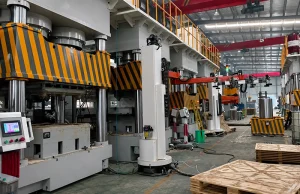
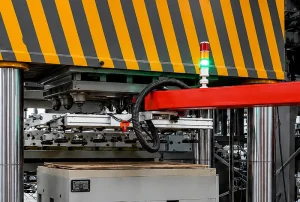
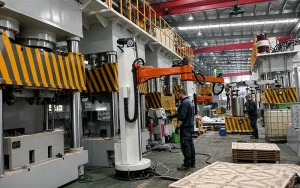
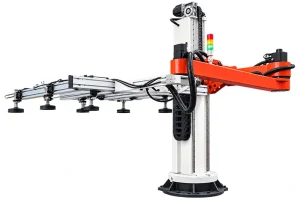
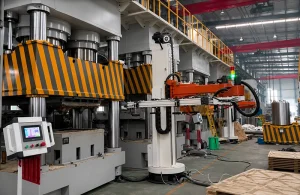
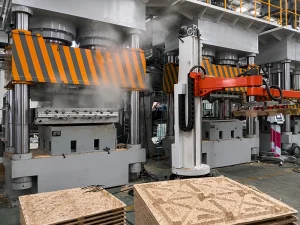
A presswood pallet plant buys tonnage and still loses output at the die exit: a manual take-out post cannot be timed to the press open and close signals, so a 1250 to 1600 ton press waits on a person every cycle, line OEE drops and unit cost carries the delay plus one operator per press on every shift. AutoG is the automatic pallet take-out robot from EMP, delivered as the press exit take-out and automatic stacking cell on a presswood pallet production line: the take-out motion is coordinated with the press open and close signals on the line PLC, a vacuum suction cup end effector takes the freshly pressed pallet at about 80 degrees Celsius without a cooling wait, transfers it by vacuum suction and stacks it where it leaves the gripper, and one arm alternately tends two presses as a dual press tending cell, so press exit manning is set per press pair instead of per press. Limits are stated plainly: rated load, working radius, repeat accuracy, suction and vacuum configuration, footprint, power and air demand, control interface detail and robot body source stay project confirmed; the 1250 to 1600 ton range, the four to five minute MDI cycle, continuous running and the replacement of about two take-out operators are supplier statements; the 80 degrees Celsius figure is quoted from the EMP equipment centre description; no ROI, payback or hourly output is claimed; and the unit is the press exit take-out and stacking device on a presswood pallet line, not the press itself, not the crush, dry or glue stage and not an independently running line.
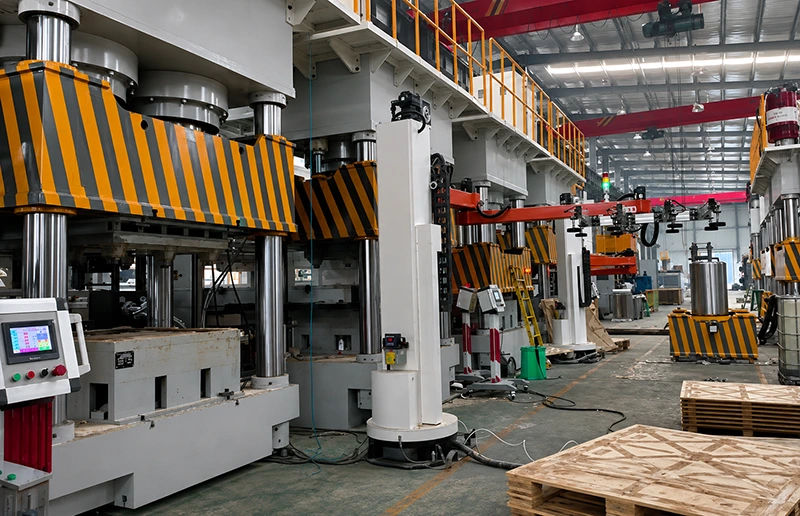
AutoG Automatic Pallet Take-Out Robot: Filling the Night Shift at the Press Exit of a European Presswood Pallet Line
A presswood pallet plant can run its hot press 24 hours a day and still be unable to run the station in front of it, because the press exit needs one take-out operator per 1250 to 1600 ton press on every shift, and the night shift is where that arrangement breaks: coverage is covered by overtime rather than by plan, a manual take-out is not synchronised to the press open and close signals so the press waits on a person, and the duty itself is a pallet leaving the mold at about 80 degrees Celsius with a grooved surface and hot MDI adhesive gas. AutoG is the automatic pallet take-out robot from EMP, delivered as the press-exit take-out and automatic stacking cell on a molded wood pallet line: a vacuum suction cup end effector takes the freshly pressed pallet on the press open signal, transfers it without a cooling wait and stacks it where it leaves the gripper, with one arm alternately tending two presses as a dual-press tending cell, so press-exit manning is set per press pair instead of per press and per shift. Limits are stated plainly: rated load, working radius, repeat accuracy, suction and vacuum configuration, footprint, power and air demand, control interface detail and robot body source stay project-confirmed; the 1250 to 1600 ton range, the four to five minute MDI cycle, continuous running and the replacement of about two take-out operators are supplier statements; the 80 degrees Celsius figure is quoted from the EMP equipment centre description; no payback, ROI or hourly output is claimed; and the unit is the press-exit take-out and stacking device on a presswood pallet line, not the press itself, not the crush, dry or glue stage and not a stand-alone line.
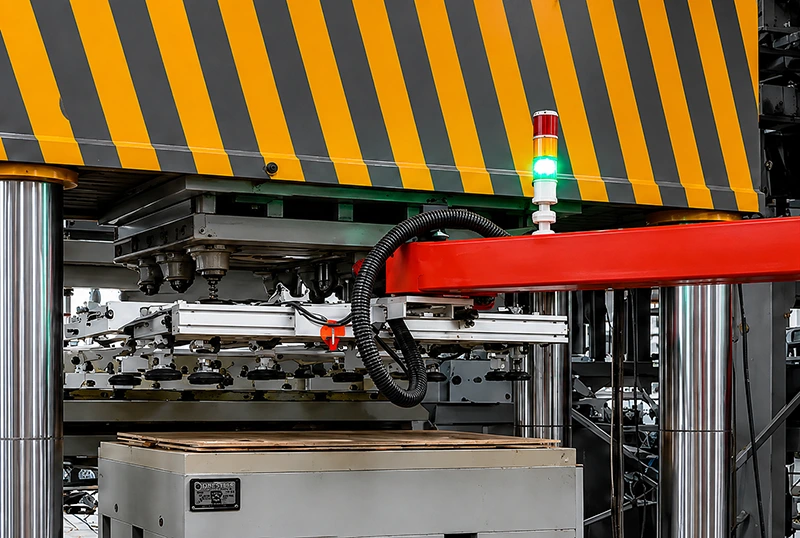
AutoG Automatic Pallet Take-Out Robot: Cutting Heat and Dust Exposure at the Press Exit on a Presswood Pallet Line
On a molded wood pallet line the press exit is the one station that still asks a person to stand in it: an operator reaches into the open die for a pallet that leaves the mold at about 80 degrees Celsius, one operator per 1250 to 1600 ton press, on every shift, in a bay that carries radiant heat, airborne wood fibre and the gases a hot MDI adhesive releases during pressing. AutoG is the automatic pallet take-out robot from EMP, delivered as the press-exit take-out and automatic stacking cell on a presswood pallet production line: on the press open signal a vacuum suction cup end effector takes the freshly pressed pallet, transfers it without a cooling wait and stacks it where it leaves the gripper, with one arm alternately tending two presses as a dual-press tending cell, so the take-out position is unoccupied from the open signal to the close signal and manning is set per press pair instead of per press. Limits are stated plainly: rated load, working radius, repeat accuracy, suction and vacuum configuration, footprint, power and air demand, control interface detail and robot body source stay project-confirmed; the 80 degrees Celsius figure is quoted from the EMP equipment centre description; the 1250 to 1600 ton range, the four to five minute MDI cycle, continuous running and the replacement of about two take-out operators are supplier statements; no ROI, payback, hourly output, medical conclusion or exposure-limit compliance claim is made; and the unit is the press-exit take-out and stacking device on a presswood pallet line, not the press itself, not the crush, dry or glue stage and not a stand-alone line.
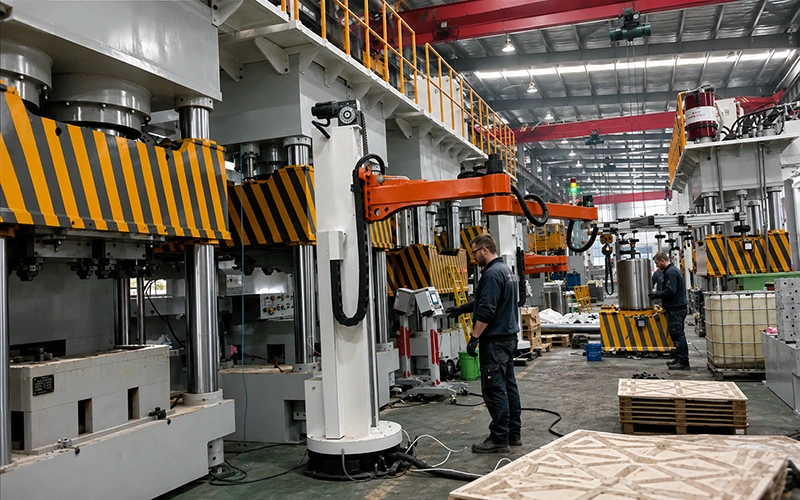
AutoG Automatic Pallet Take-Out Robot: Taking the Person Out of the Press Danger Zone at the Die Exit
A presswood pallet production line is automated up to the die and then hands the last metre back to a person: at the press exit an operator reaches into the open die for a pallet that leaves the mould at about 80 degrees Celsius, one operator for every 1250 to 1600 ton press, on every shift, inside the press danger zone where a mis-command is a crushing or severing accident rather than a near miss. AutoG is the automatic pallet take-out robot from EMP, delivered as the press-exit take-out and automatic stacking cell on a presswood pallet production line: a six-axis articulated arm with a vacuum suction cup end effector takes the freshly pressed pallet on the press open signal, transfers it without a cooling wait, stacks it where it leaves the gripper and alternately tends two presses as a dual-press tending cell, so the take-out position is unoccupied from the open signal to the close signal and press-exit manning is set per press pair instead of per press. Limits are stated plainly: rated load, working radius, repeat accuracy, suction and vacuum configuration, footprint, power and air demand, control interface detail and robot body source stay project-confirmed; the 80 degrees Celsius direct take-out figure is quoted from the EMP equipment centre description; the 1250 to 1600 ton range, the four to five minute MDI press cycle, continuous running and the replacement of about two take-out operators are supplier statements; no ROI, payback or hourly output is claimed; and the unit is the press-exit take-out and stacking device on a molded wood pallet line, not the press itself, not the crush, dry or glue stage and not a stand-alone line.
AutoG Automatic Pallet Take-Out Robot: Doubling 24/7 Molded Pallet Output Without Doubling the Press-Exit Crew
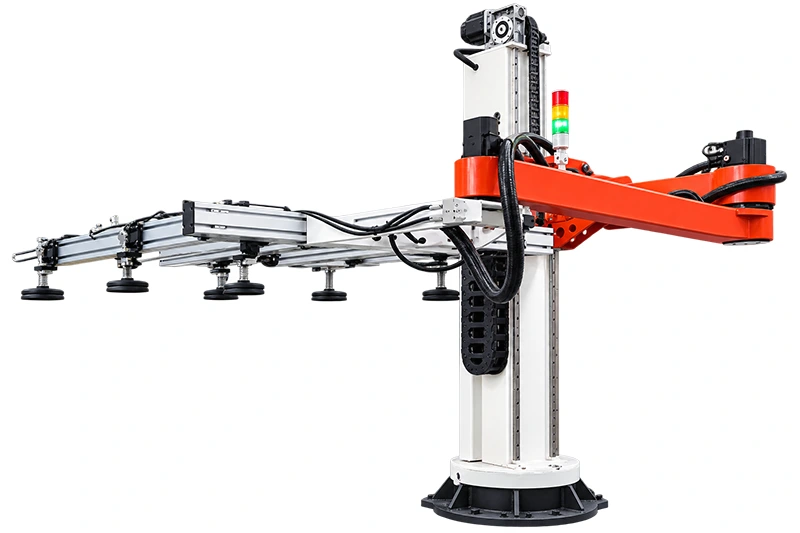
A molded pallet plant running more than 200,000 blocks a day, 24 hours and seven days, carries a take-out crew that scales with tonnage rather than with cost: one operator per 1250 to 1600 ton press, every shift, reaching for a pallet that leaves the die at about 80 degrees Celsius, then lifting it onto a stack by hand. The pallet has to be visibly cheaper than a sawn timber one, and the exit is the one station where every extra thousand units buys more people. AutoG is the automatic pallet take-out robot from EMP, delivered as the press-exit take-out and automatic stacking cell on a presswood pallet production line: it takes the freshly pressed pallet on the press open signal, transfers it by vacuum suction without a cooling wait, stacks it where it leaves the gripper and alternates across two 1250 to 1600 ton presses, so press-exit manning is set per press pair instead of per press and rising volume no longer buys rising headcount. Limits are stated plainly: rated load, working radius, repeat accuracy, suction and vacuum configuration, footprint, power and air demand, control interface detail and robot body source stay project-confirmed; the 1250 to 1600 ton range, the four to five minute MDI cycle, the 24-hour running statement and the replacement of about two take-out operators are supplier statements; the 80 degrees Celsius figure is quoted from the EMP equipment centre description; no ROI, payback or hourly output is claimed; and the unit is the press-exit take-out and stacking device on a molded wood pallet line, not the press itself, not the crush, dry or glue stage, not a general case palletizer and not a stand-alone line.
AutoG Automatic Pallet Take-Out Robot: Cost-Optimised Press-Exit Automation Beside a European Press Body
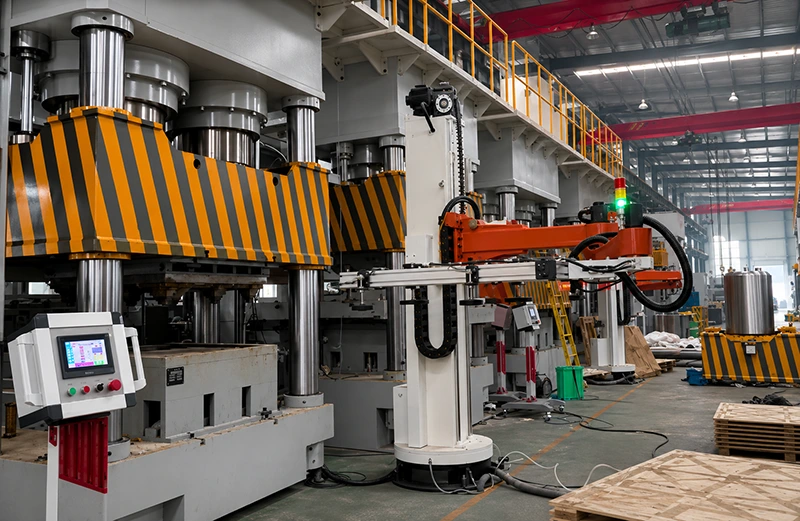
A molded wood pallet producer that insists on a German, Austrian or Italian press body while its price strategy demands a lower unit cost has one variable it can move without touching the forming technology: the press exit. AutoG is the automatic pallet take-out robot from EMP, specified as the press-exit take-out and automatic stacking cell on a presswood pallet production line, taking the freshly pressed pallet at about 80 degrees Celsius through a vacuum suction gripper without a cooling wait and stacking it where it leaves the gripper, with one arm alternately tending two 1250 to 1600 ton presses as a dual-press tending cell. That is the cost-optimised position: the press body, the hydraulics, the mold and the line PLC stay as specified, and the hot, repeated, least-differentiated take-out duty moves off people, so take-out capex and press-exit manning are set per press pair rather than per press. Limits are stated plainly: rated load, working radius, repeat accuracy, suction and vacuum configuration, footprint, power and air demand, control interface detail and robot body source stay project-confirmed; no ROI, payback or hourly output is claimed; the 80 degrees Celsius figure is quoted from the EMP equipment centre description; the 1250 to 1600 ton range, four to five minute MDI cycle, continuous running and two-operator replacement are supplier statements; and the unit is the press-exit take-out and stacking device on a molded wood pallet line, not the press itself, not the crush, dry or glue stage and not a stand-alone line.
AutoG Automatic Pallet Take-Out Robot: Moving a Press Exit From Wood Fibre to Coconut Husk Fibre Without Assuming an 80°C Direct Pick
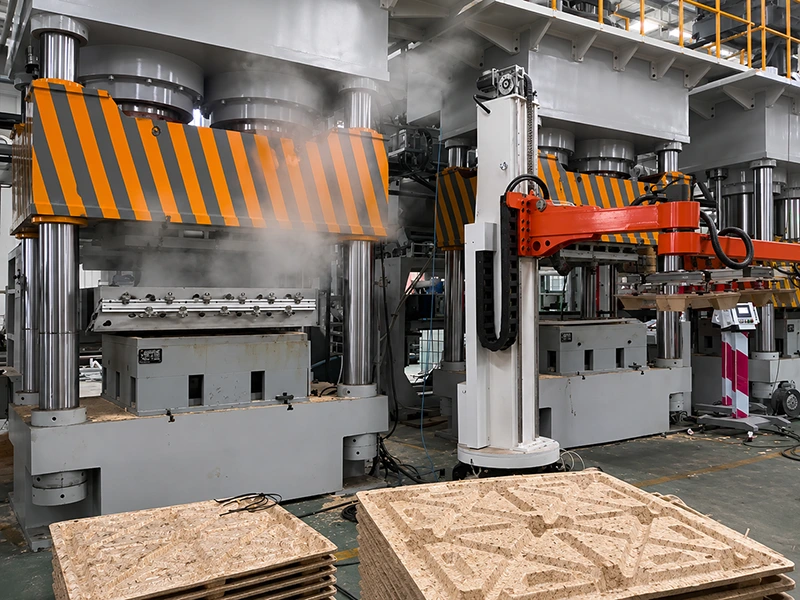
A molded pallet plant that has proven wood fibre takes its first real material risk at the press exit, not at the mixer: a coconut husk pallet can differ from a wood-fibre pallet in formed density, die-exit temperature and deck surface, so a take-out head and cycle sized on wood fibre is an assumption rather than a specification. AutoG is the automatic pallet take-out robot from EMP for hydraulic press pallet take-out on a presswood pallet production line, taking the freshly pressed pallet on the press open signal, transferring it by vacuum suction and stacking it where it leaves the gripper, with one arm alternating across two 1250 to 1600 ton presses as dual-press tending, so press-side manning is set per press pair. The suction cup arrangement, grip pattern and take-out cycle are validated on the customer’s own coconut husk pallet in a sample trial: die-exit temperature is measured at more than one deck point, pallet form and groove geometry are logged, and vacuum hold is tested on the hot surface. Limits are stated plainly: EMP’s published 80 degrees Celsius direct take-out figure belongs to presswood pallets and is not carried over to coconut husk before that trial, rated load, working radius, repeat accuracy, suction and vacuum configuration, footprint, power and air demand, robot body source and control interface stay project confirmed, the 1250 to 1600 ton range and the 4 to 5 minute MDI press cycle are supplier statements, no ROI, payback or hourly output is claimed, and the unit is the press-exit take-out and stacking device on a molded wood pallet line, not the press, not the crush, dry or glue stage and not a stand-alone line.